
Intention Behind Force Production
How can cueing of an exercise impact the force exposure on an athlete?

Oftentimes the weight room is used as a means to expose athletes to higher levels of force than they are used to experiencing. Bilateral and unilateral lower and upper body exercises are usually looked at as the main way to build the engine in terms of what an athlete can handle and produce from a force standpoint. However, plyometrics and ballistics can also be a large contributor into building an athlete's engine.
Not only are the exercises themselves going to help an athlete become more powerful and explosive, but so will the correct cueing and intent behind every rep to get the desired outcome.
To demonstrate this I completed a number of altitude landings from 18” and 24” boxes with both a “soft and smooth” landing cue and a “stiff and fast” landing cue on our Hawkin Dynamics force plates.
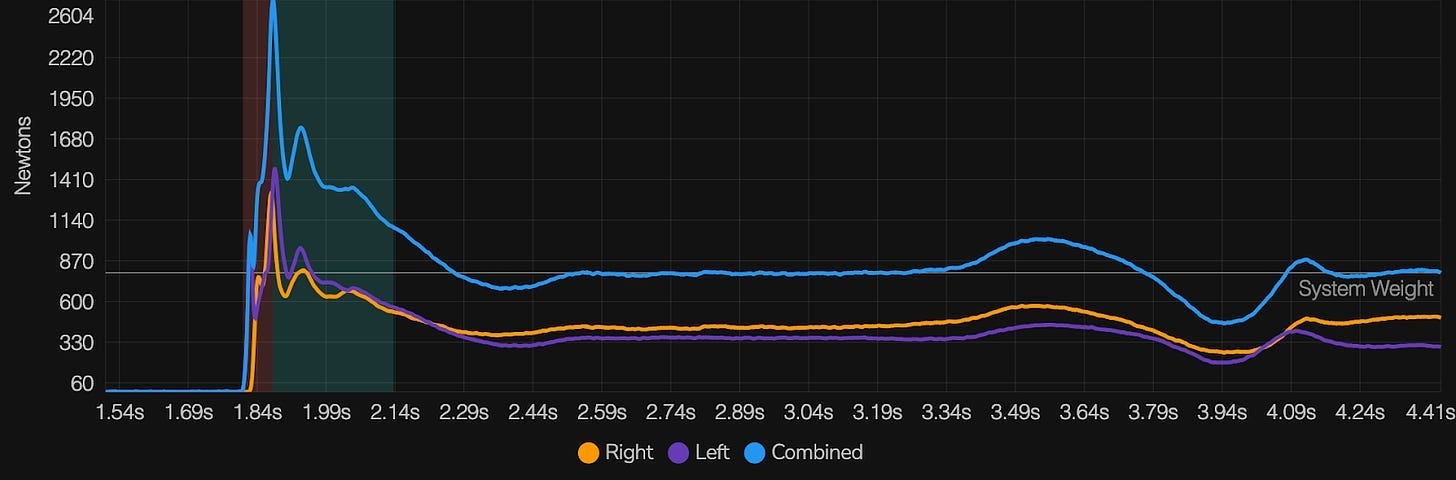
The graph above is from the first landing where I used the thought of landing soft from a 18” box. I reached a peak force of about 2600 N which is about 3.3x my body weight.
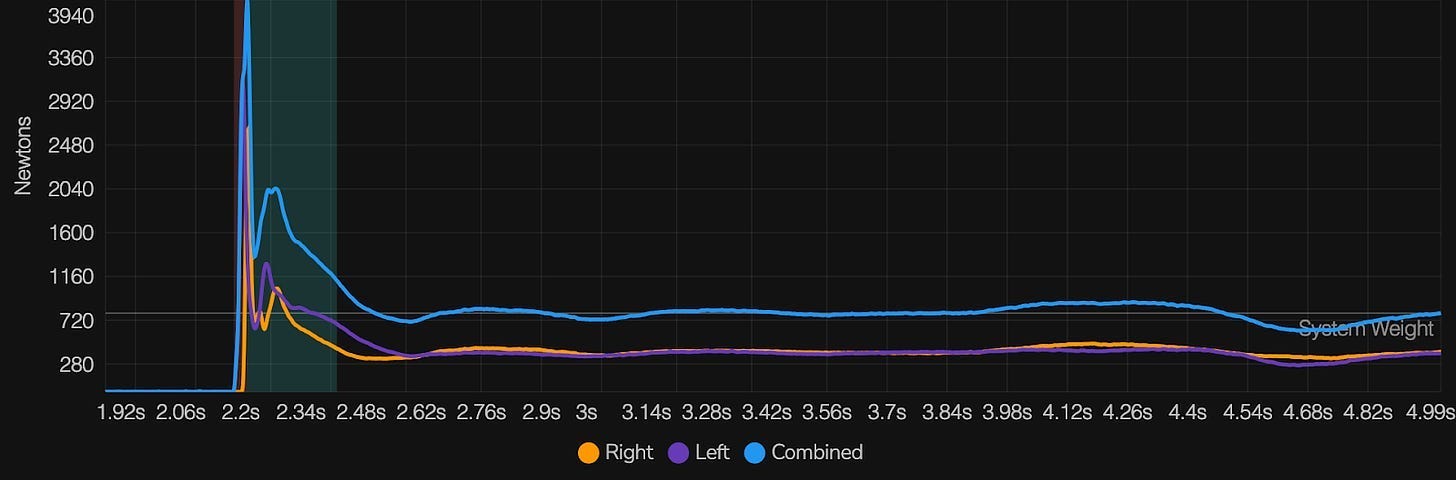
This second graph above is from a subsequent landing in which I was attempting to be “stiff and quick” in landing. I reached a peak force of almost 4000 N which is almost 5x my body weight. For further context both landings from the 18” box had the same exact landing velocity, the only difference was in the “intent” behind the landing.
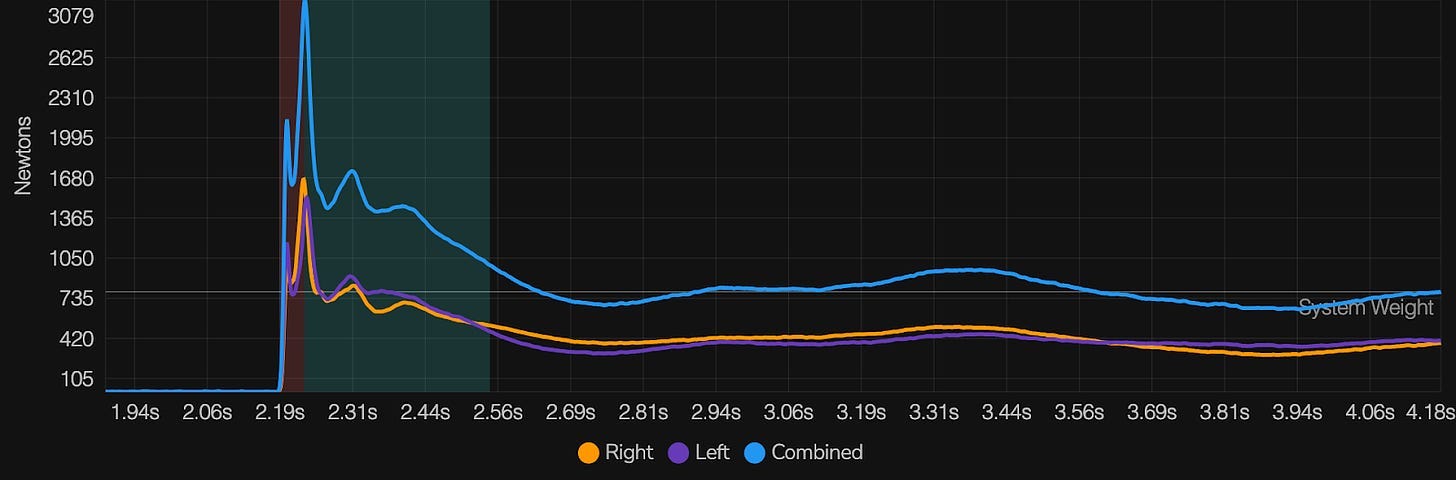
This graph is from a landing from a 24” box in which again I tried to land soft. I only reached a peak force of around 3000 N which is only 3.8x body weight. This is a lower force exposure than I got from a landing 6” lower with alternate cueing.
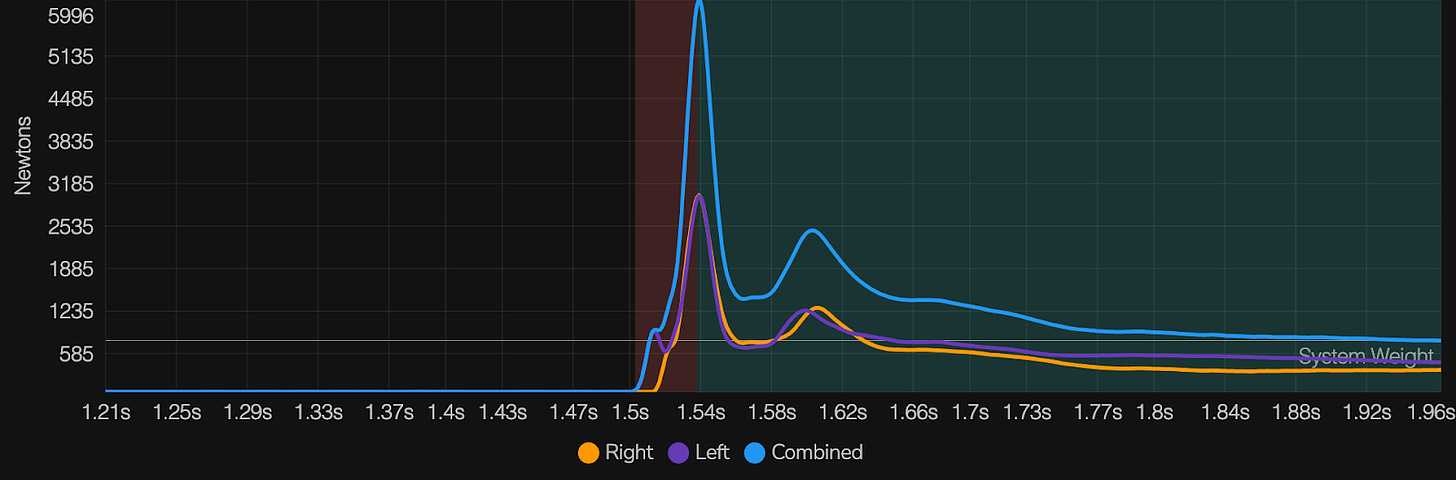
Finally, this is a graph from a 24” altitude landing with a stiff and fast landing cue. I reached almost 6000 N which is around 7.5x body weight, the highest force exposure reached from any of the landings. Again, both landings from the 24” box had similar landing velocities, the only difference came from the intent behind the rep.
More to come on why exactly this occurs but it is clear that having the right intent behind exercises can make a difference in whether or not the desired outcome is achieved.
These same concepts can be applied to things such as broad jumps, vertical jumps, and any sort of plyometric or ballistic where the intention is translating “strength” gained from loading into higher force/faster production. The way you go about getting off of the ground or making ground contact really matters.
It may not always be the intention for an athlete to reach high force exposures throughout a training session. Time of year, training background, injury history, and many other factors may all play a role in what kind of strain is intended to be put on an athlete's system. Being aware of cueing and intention behind the exercise at hand can have a large impact on whether or not the intended training effect is taking place.